When A Supplement Label Names Ingredients But Hides The Amounts
A label that names ingredients without stating individual amounts tells you what is in the bottle but not whether there is enough of it to matter.
It is legal, extremely common, and it removes the one piece of information you actually need to judge a product.
Two ways a label can name an ingredient
Open any supplement panel and ingredients appear one of two ways.
Quantified: the ingredient is listed with its own weight — ‘Caffeine 5 mg’. You know exactly what you are getting and can compare it against anything you like.
Named only: the ingredient appears on the label, sometimes grouped in a blend with a total weight, sometimes with no weight at all. You know it is present. You do not know whether it is present in a research-comparable amount or a token pinch.
Why manufacturers do it
The stated reason is trade secrecy: disclosing exact amounts lets competitors copy the formula.
That argument has some force for a genuinely novel combination. It has much less when the ingredients are eight botanicals that every competitor already uses and every buyer can read on the front of the bottle.
The unstated reason is that undisclosed amounts make it impossible to see when an expensive headline ingredient is present in a trivial quantity — sometimes called fairy dusting. Both motivations exist in the industry, and the problem is that you cannot tell which applies to the bottle in your hand.
The tell that is easy to miss
Here is a pattern worth watching for, because it recurs across the category.
Sometimes the ingredients that are quantified turn out to be the ones that matter least. A label declares sodium at 4 mg and caffeine at 5 mg — both verifiable, both nutritionally negligible — while the eight botanicals that define the product and justify its price carry no amounts at all.
Technically that is full disclosure of everything the rules require. Practically, the transparency lands on the ingredients where it changes nothing.
Five questions that get you most of the way
1. Which ingredients carry stated weights, and are they the ones the marketing leads with? If not, note the mismatch.
2. If there is a blend total, divide it by the ingredient count. That average is your ceiling for the typical ingredient and often answers the question immediately.
3. Where does your ingredient of interest sit in the list? Ingredients are ordered by weight descending, so position carries information even when amounts do not.
4. What dose does research on that ingredient use? Look it up. If studies use 500 mg and the whole serving weighs less than that, the arithmetic has answered you.
5. Is anything standardised? For botanicals, ‘standardised to X% withanolides’ is a far stronger signal than a raw weight, because it tells you about the active compounds rather than the plant matter.
When it is genuinely fine
Unquantified labels are not automatically a scam, and treating them that way would be lazy.
Broad formulas covering several pathways have real value for someone who wants general support in one daily serving rather than to optimise one ingredient. Gummies in particular face a physical constraint — there is only so much you can fit into something that still tastes acceptable — which is a genuine trade-off rather than a trick.
The issue is not that the amounts are small. It is that you are asked to take them on trust, and trust is easier to extend when a company has given you a reason for it.
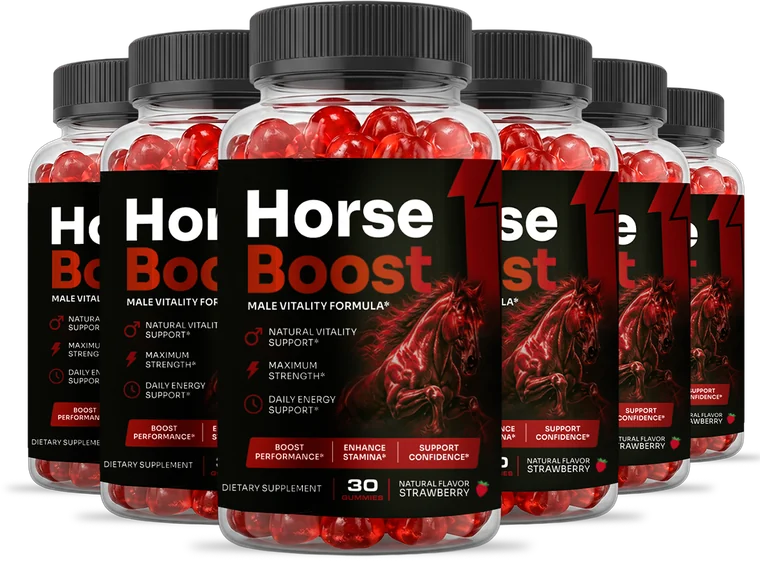
Applying this to HorseBoost
We apply the same reading to the product this site covers, because doing otherwise would make the rest of this article worthless.
HorseBoost declares ten ingredients. Two carry weights: sodium at 4 mg and caffeine at 5 mg. Eight do not: Muira Puama, Maca, Catuaba, Green Tea, Ashwagandha, L-Arginine, Tribulus and Horny Goat Weed.
That is exactly the pattern described above — the verifiable numbers are the negligible ones. It does not make the product useless; broad botanical support is a legitimate thing to want, and the gummy format has real advantages. It does mean expectations should sit at ‘supportive alongside sleep and training’ rather than anything stronger, which is where our full assessment lands.